
 Image 1 of 1
Simple, colourful visuals that make big conversations about bias, privilege, empathy and speaking up easier to start and easier to keep going.
Benefits
Made for conversation: Each graph turns one big idea into a simple visual you can talk through in a minute or two.
Parents, carers and teachers: Use them at home, in the classroom, in staff rooms and in community groups.
Ready to print or share: Thirteen pages designed to be displayed, handed out or used as discussion starters.
What’s inside
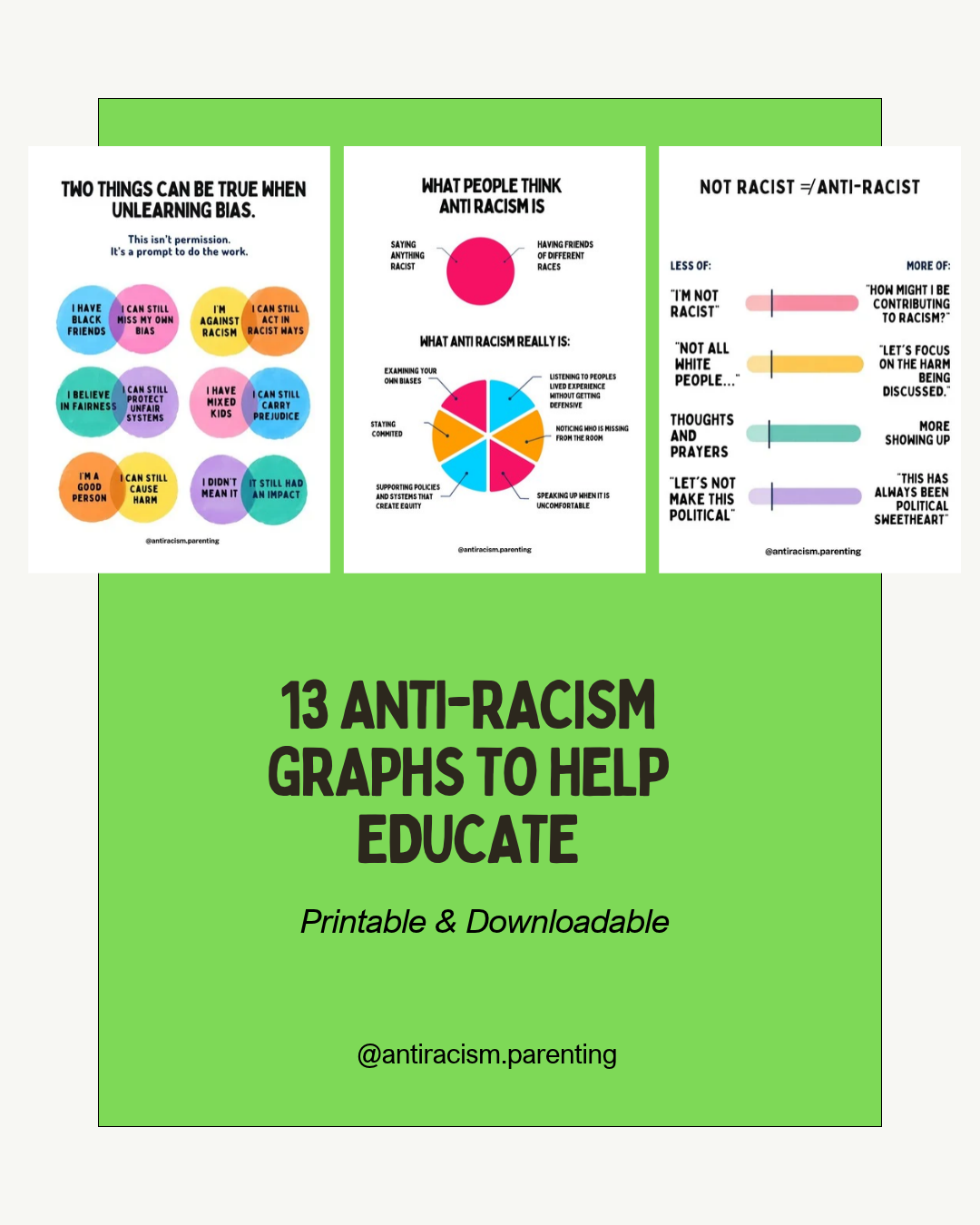
Thirteen graphs, each built around a single idea you can come back to again and again.
Two things can be true when unlearning bias
Should we teach kids not to see race?
What people think anti-racism is
If you speak up, it changes
The missing piece is us. Together.
‘Later’ is a privilege
Not racist ≠ anti-racist
Do the math
Your experience of racism is not the limit of someone else’s reality
What empathy really is
Rewriting the language of parenting
Hobbies to keep your family anti-racist
The anti-racism alphabet